Online Courses:
TeleMental Health: Practical Applications ~ TeleMental Health: The New Standard
Psychology of the Web ~ HIPAA Made Friendly
HIPAA and Technology in Mental Health Practices
Electronic Health Records ~ Digital and Social Media Ethics
HIPAA’s Patient Access Rights ~ Online Group Therapy
Table Of Contents
- TeleMental Health Platforms
- TeleMental Health Across State Lines
- State TeleHealth Laws & Licensing Boards
- Video Conferencing
- Ethics Codes TeleMental Health
- Insurance, Billing, Reimbursement & CPT
- Second Life & Virtual Realities
- Professional Telehealth Associations
- Paperless Office
- Federal Resources, Laws, and Regulations
- Psychology of the Web & TeleMental Health
- Guidelines
- Miscellaneous Resources
- Online Graduate Training in Mental Health
- E-Supervision, TeleSupervision Resources
- Online Group Therapy
- References: TeleMental Health
- You, your doctor and the Internet: Should a caregiver ever Google a patient? Would you ask your physician to be a Facebook ‘friend’? Ethical questions abound, and the doctor-patient relationship is at stake.
- The Internet’s ethical challenges
- Think before you click: In a 21st-century twist on medical ethics, Internet search engines and social networking sites test traditional boundaries between patients and doctors.
- What is Digital Ethics: Clinical & Ethical Considerations
- Chamberlain, J. (May 2010) Is it ever OK for a therapist to snoop on clients online?
- Zur, O. (Summer 2010, Updated 2014) Should Therapist Google Clients?
- Foreman, J. (April 2010) You, your doctor and the Internet: Should a caregiver ever Google a patient? Would you ask your physician to be a Facebook ‘friend’? Ethical questions abound, and the doctor-patient relationship is at stake.
- Therapists Googling Clients
- To Google or Not to Google Our Clients
- Kolmes, K., & Taube, D. O. (2016). Client discovery of psychotherapist personal information online. Professional Psychology: Research and Practice.
- Kolmes, K. & Taube, D.O. (2019). Yelped: Psychotherapy in the time of online consumer reviews. Practice Innovations, 4, 205-213. DOI: 10.1037/pri0000093
- Scarton, Dana. (March 30, 2010) Google and Facebook raise new issues for therapists and their clients. [Electronic version]. Washington Post
- Do You Google Your Shrink?, by Anna Fells
- Clients Googling Therapists, Power Differential
- Digital Transparency
 (Transcript)
 - Google Factor
- Clients Googling Therapists, Power Differential
- Intentional & Unwitting Self-Disclosures On The Net
Yelp: Responding to Negative Postings
- Kolmes, K. & Taube, D.O. (2019). Yelped: Psychotherapy in the time of online consumer reviews. Practice Innovations, 4, 205-213. DOI: 10.1037/pri0000093.
- Responding to Online Negative Reviews
- Monitoring and Defending Reputations (Transcript)
Facebook & Psychotherapy and Facebook Privacy Issues
- Clients as Facebook Friends, by Ofer Zur Ph.D.
- Discussion on Facebook
- Facebook & Psychotherapy, by Ofer Zur Ph.D.
- Facebook’s New Privacy Changes: The Good, The Bad, and The Ugly, by Kevin Bankston
- Facebook Privacy Changes Inspire Praise, Optimism, and Skepticism, by Kevin Bankston
- Facebook tosses graph privacy into the bin, by Joseph Bonneau
- The Inside Facebook Guide to Protecting Your Privacy on Facebook, by Jessica Lee
- Are you in counseling? Would you ‘friend’ your therapist?, by DeeAnna. M. Nagel
- Facebook Further Reduces Your Control Over Personal Information, by Kurt Opsahl
- Facebook’s Eroding Privacy Policy: A Timeline, by Kurt Opsahl
- Six Things You Need to Know About Facebook Connections, by Kurt Opsahl
- How to Get More Privacy From Facebook’s New Privacy Control., by Kurt Opsahl
- Social worker in UK was sanctioned after posting clinical details on FaceBook, by Luke Stevenson
- Why Your Doctor Won’t Friend You On Facebook, by Shefali Luthra
Social Media & Psychotherapy and Counseling
- Keely Kolmes’ Social Media Policies
- Why You Need a Social Media Policy
Stalking, Harassment & Violations of Privacy
- Taube, D., Kolmes, K, PsyD, & Vogele, C. Preliminary Report: Without My Consent Survey of Online Stalking, Harassment and Violations of Privacy
References: Digital and Social Media Ethics
- American Association for Marriage and Family Therapy (2015). Code of Ethics. Retrieved from https://www.aamft.org/Legal_Ethics/Code_of_Ethics.aspx
- American Counseling Association (2014). ACA Code of Ethics. Retrieved from https://www.counseling.org/resources/aca-code-of-ethics.pdf
- American Psychological Association. (2017). Ethical Principles of Psychologists and Code of Conduct. Retrieved from https://www.apa.org/ethics/code/
- Balick, A. (2013). The psychodynamics of social networking: Connected-up instantaneous culture and the self. London: Karnac Books.
- Barnett, J., (2009). Social Networking Sites, Clients, and Ethics: Dilemmas and Recommendations. [Lecture]. From International Conference on Use of the Internet in Mental Health, Montreal 2009. Retrieved from http://bcooltv.mcgill.ca/Viewer2/?RecordingID=27892
- Barnett, Jeffrey E. & Kolmes, Keely.(2016). The practice of tele-mental health: Ethical, legal, and clinical issues for practitioners. Practice Innovations, Vol 1(1), 53-66.
- Behnke, Stephen, Ethics in the age of the Internet. APA Monitor on Psychology, July/August 2008, 74-75.
- Blue, V. (2014). Chapter 7: People search websites. In The smart girl’s guide to privacy. (pp. 84-96). Digita Publications Privacy
- Collins, L. H. (2007). Practicing safer Listserv use: Ethical use of an invaluable resource. Professional Psychology: Research and Practice, 38, 690-698.
- DiLillo, D., & Gale, E. B. (2011). To Google or not to Google: Graduate students’ use of the Internet to access personal information about clients. Training and Education in Professional Psychology, Vol 5(3), 160-166.
- Donner, M., (2007). The Ethical Use of the Listserv: Privacy and Professional Conduct, The California Psychologist, November/December 2007, 22.
- Duncan-Daston, R., Hunter-Sloan, M., & Fullmer, E. (2013). Considering the ethical implications of social media in social work education. Ethics and Information Technology, 15(1), 35–43.
- Fange, L., Mishna, F., Zhang, V. F., Van Wert, M., & Bogo, M. (2014). Social media and social work education: Understanding and dealing with the new digital world. Social Work in Health Care, 53, 800–814.
- Gabbard, G.O. (2012). Clinical challenges in the internet era. American Journal of Psychiatry 169(6): 460–462.
- Kaslow, Florence W.; Patterson, Terence; Gottlieb, Michael. (2011). Ethical dilemmas in psychologists accessing Internet data: Is it justified? Professional Psychology: Research and Practice, Vol 42(2), 105-112.
- Kolmes, K. (2009). Managing Twitter As a Mental Health Professional. Retrieved from http://drkkolmes.com/2009/05/04/managing-twitter-as-a-mental-health-professional/#.XTc_ni2ZO8U .
- Kolmes, K. (2010). Private practice social media policy. Retrieved from http://www.drkkolmes.com/docs/socmed.pdf
- Kolmes, K. (2012). Social Media in the Future of Professional Psychology. Professional Psychology: Research and Practice, Vol 43(6), 606-612
- Kolmes, K. (2016). Digital and Social Media Multiple Relationships on the Internet. In Ofer Zur (Ed.) Multiple Relationships in Psychotherapy and Counseling: Unavoidable, Mandatory, and Common Relations Between Therapists and Clients. Taylor & Francis.
- Kolmes, K. & Taube, D. O., (2014). Seeking and Finding Our Clients on the Internet: Boundary Considerations in Cyberspace. Professional Psychology: Research and Practice, Vol 45(1), Feb 2014, 3-10. doi: 10.1037/a0029958
- Kolmes, K., & Taube, D. O. (2016). Client discovery of psychotherapist personal information online. Professional Psychology: Research and Practice, Vol 47(2), 147-154
- Lannin, D. G., & Scott, N. A. (2013). Social Networking Ethics: Developing Best Practices for the New Small World. Professional Psychology: Research and Practice, Vol 44(3), 135-141
- Lehavot, K., Barnett, J., & Powers, D. (2010). Psychotherapy, professional relationships, and ethical considerations in the MySpace generation. Professional Psychology: Research and Practice. Vol 41(2), 160-166.
- Mattison, M. (2012). Social work practice in the digital age: Therapeutic e-mail as a direct practice methodology, Social Work, 57, 249-258.
- National Association of Social Workers (2017). Code o Ethics. Retrieved from https://www.socialworkers.org/About/Ethics/Code-of-Ethics/Code-of-Ethics-English
- Reamer, F. G. (2015). Clinical social work in a digital environment: Ethical and risk- management challenges. Clinical Social Work Journal 43, 120–32.
- Reamer, F. G. (2018). Ethical Standards for Social Workers’ Use of Technology: Emerging Consensus. Journal of Social Work Values and Ethics. 15/2.
- Younggren, J. N. (2010). To Tweet or Not to Tweet, That is the Question. The Clinical Psychologist, 63/2, 18-19.
- Zur, O. (2012). TelePsychology or TeleMentalHealth in the digital age: The future is here. The California Psychologist 45, 13–15.
- Zur O. & Donner, M.B. (2009, January/February). The Google Factor: Therapists’ Transparency in the Era of Google and MySpace. The California Psychologist, 23-24.
- More Reasonable Breach Notification Reporting Periods for CA Health Care Providers in 2015
- New HIPAA Rules Are Here. Yay!
- HIPAA Final Rule of 2013: Are you ready for the changes this fall?
- Online Data Backups and HIPAA Compliant Practice: A Government-Produced Monkey Wrench
- Discussion about the 2013 HIPAA compliance deadline on LinkedIn
- HIPAA Privacy Rule and Sharing Information Related to Mental Health
- Am I a HIPAA Covered Entity? How Much Does It Matter If I Am Or Not? , by Roy Huggins
- HIPAA Security Rule Educational Paper Series (HHS)
- Security Standards: Implementation for the Small Provider (HSS)
- HIPAA Forms from Zur Institute
E-Mails in Traditional Therapy and in TeleMental Health
Hushmail and other secure email services are a good idea, but many, if not most, clients balk at the extra hassle involved in using them to communicate with their therapists, and may choose to use the familiar and free, but unsecured, emails after being informed of the risk by their therapists (via an Informed Consent and e-mail signature.)
- To Encrypt Email or Not to Encrypt Email?
- Is Email HIPAA Compliant?
- Just How Secure Is Email, Anyway?
- A Therapist and Coach Guide to Encryption
- I Love These Emails, or Do I?
- Medical Groups Continue to Discourage Email/Social Networks (but consumers, especially 25-40 years old want more of it)
- Email Tips for Clinicians
- Encrypted Email, Chats, and Forums
- Encrypted E-Mail Systems:
- Is GMail Encrypted?
- Hushmail: A good idea, except many clients may prefer not to go through extra hassle of dealing with it.
- qliq is a secure, HIPAA and HITECH-compliant healthcare communication platform.
Use of Text in Traditional Therapy and in TeleMental Health
- Text Messaging (between providers) Ban Reinstated for Providers (July/2016)
- One-third of Americans prefer texts to voice calls, CNN
- HIPAA Compliance for Clinician Texting
- Signal Product for Texting with Clients
- Text therapy: New platforms spark questions, APA (June/2015)
- Secure SMS:
- CellTrust provides a secure SMS (text) solution
- qliqConnect
Are Square, Credit Cards, & Banks HIPAA Compliant?
- Use Square, Be HIPAA Compliant! Ethics, HIPAA… and What About PayPal? by Roy Huggins
- Potential Privacy and HIPAA Compliance Concerns with Square, by Rob Reinhardt, LPC, PA
- Is Square HIPAA Compliant? How About PCI Compliant? , by Roy Huggins
- Passing Credit Card Fees On To Clients: Is It Ethical, Legal or Good Business Practice? , by Roy Huggins
Encryption & Computer Security
- Encryption
- Using your computer’s encryption software, by Roy Huggins
- AxCrypt - Password Protect Files With Strong Encryption
- Anti-virus software
- Wikipedia Comparison of Antivirus Software
- WiFi and Public Network
- How to Stay Safe on Public WiFi Networks
- Password
- Password Strength Test Tool
- Diceware Passphrase: What is a passphrase and help choosing a strong one
- 1password: Password storage program
- LastPass: Remembering passwords
- Resources by HHS:
- Business Associates
- FAQ About Business Associates
- For Covered Entities and Business Associates
- Business Associate Contracts
- What Is a HIPAA Business Associate Agreement?, by Roy Huggins
HIPAA & NPI: Registration & Basic Info
- Applying for a National Provider Identifier: Information and guidance for psychologists by APA
- NPI Registry
- NPI Application Instructions
HIPAA’s Patient Access Rights: What Patients & Providers Need to Know
- Existing Federal Privacy Laws
- Legislative Survey of State Confidentiality Laws, with Specific Emphasis on HIV and Immunization
- The Patient Care Partnership Replacing the AHA’s Patients’ Bill of Rights, this plain language brochure informs patients about what they should expect during their hospital stay with regard to their rights and responsibilities.
- Health Information Security and Privacy Collaboration: Harmonizing State Privacy Law Collaborative, Final Report
- HSPLC Milestone Report: Analytical Framework for Best Practices
- HSPLC Roadmap: Analytical Framework and Collaborative Recommendations
- De-identifying: Guidance Regarding Methods for De-identification of Protected Health Information in Accordance with the Health Insurance Portability and Accountability Act (HIPAA) Privacy Rule
- Definition of De-Identified Data
- Two Shocking Electronic Records Revelations
- EMR vs. EHR – What Is the Difference? : A blog post from ONC explaining the distinction between EHR and classic electronic medical records.
- What is Meaningful Use? The HealthIT.gov site defines and explains the program.
- Health Information Privacy & Security: A Ten Step Plan: HealthIT.gov’s guidance on addressing HIPAA compliance with regard to EHR.
- EHR Incentive Programs
- EMR vs. EHR Redux
- EHRs embedded in payment rules for non-MU providers
- Who Owns The Data In Your EMR/EHR?
Cloud Based Management Systems
- Examples of management systems for psychotherapists:
- TherapyCharts
- Thriveworks
- Practicefusion
- TherapyNotes
- TherapyAppointment.com
- The use of cloud storage of medical records has proliferated in recent years.
- Cloud Practice Management System
- Ensuring Healthcare Privacy in the Cloud, Before the HIPAA Fines Hit
- Which Cloud Storage Services are HIPAA Compliant?
- There are numerous companies that provide cloud storage and claim to be HIPAA compliant. A couple of examples are:
- My Docs Online
- TrueVault
- Ensuring Healthcare Privacy in the Cloud, Before the HIPAA Fines Hit
- Dropbox Is Not HIPAA Compliant
- Random HIPAA Audits 2016: Will You Be Chosen?
- HIPAA Privacy, Security, and Breach Notification Audit Program
Telehealth, e-therapy, online therapy, online counseling, tele-medicine, e-counseling, or TeleMental health: all refer to the use of digital technology to provide clinical services, such as assessment and treatment. Telehealth activities may include providing clinical services by telephone, email, chats, interactive televideo communications technology such as Skype, or via virtual reality (VR) such as Second Life (SL), to individuals in conjunction with face-to-face (f2f) therapy or with no in-person contact. States and organizations vary in their definitions of telehealth.
 Make sure to verify that the platform you choose to use is HIPAA compliant and complies with your state, federal, and your state and national professional organizations rules, codes of ethics, laws, and/or regulations.
TeleMental Health Technology Comparisons: A useful website that compares different TeleMental Health options by Behavioral Health Innovation
TeleMental Health Across State Lines
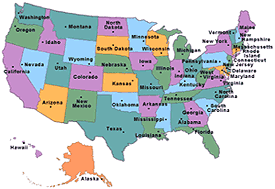
- Lesley, R., J.D., LICENSING BOARD ISSUES WARNING TO PATIENTS WHO TRAVEL OUT OF STATE! Re: Telephone Counseling/Psychotherapy in Avoiding Liability Bulletin.
- TeleMental Health Services Across State Lines by O. Zur, Ph.D.
- Can You See Clients Back at Home via Telehealth While You Travel Out of State? By Roy Huggins, LPC, NCC
- The Psychology Interjurisdictional Compact (PSYPACT)
- Can I Practice “Skype Therapy” Across State Lines? by Roy Huggins, LPC NCC
- CA Status on cross state lines:
§1815.5. Standards of Practice for Telehealth (a) All persons engaging in the practice of marriage and family therapy, educational psychology, clinical social work, or professional clinical counseling via telehealth, as defined in Section 2290.5 of the Code, with a client who is physically located in this State must have a valid and current license registration issued by the Board. - For an excellent analysis of risk management of across state lines issues that is realistic, informed, intelligent, and not fear-based, see: Harris, E & Younggren, J. N. (2011). Risk management in the digital world. Professional Psychology: Research and Practice, 42 (6), 412-418. For Abstract: http://psycnet.apa.org/journals/pro/42/6/412/
State TeleHealth Laws & Licensing Boards
- A Comparison of Telemental Health Terminology Used Across Mental Health State Licensure Boards (2016)
- CA Regulations update 7/1/2016: §1815.5. Standards of Practice for Telehealth
- CA-BBS Consumer information on telehealth
Video Conferencing
Skype, while free, familiar and encrypted, is no longer an acceptable option for videoconferencing as part telemental health as it does not give a BAA and is not considered HIPAA Compliant.
- How Skype Became Software Non-Grata, and Other Tech Will, Too, by Roy Huggins
- Reviewing the Debate on Skype & HIPAA Compliance and Introducing the Alternative Option
Below is a list of several websites that market videoconferencing services to mental health and other professionals. Some of these sites claim to be HIPAA compliant. You must verify that they are, indeed, HIPAA compliant and request a Business Associate Agreement. Also pay attention to cross state lines laws in regulations.
- cloudvisittm.com
- Doxy.me
- hipaachat.com
- thera-link.com
- virtualtherapyconnect.com
- wecounsel.com
- VSee
- zoom.us
- Comprehensive list of telehealth and videoconferencing platforms, by Jay Ostrowski
- Free Online Therapy Software Compared: Usefulness, Ease, Security, Support, & HIPAA, by Roy Huggins
Eye Contact in Video Conferencing
- Making Eye Contact Over Video in Telemental Health Services
- Reviewing the Debate on Skype & HIPAA Compliance and Introducing the Alternative Option
- To Skype or not to Skype – LI Discussion
- Is FaceTime HIPAA Compliant?
- Is Apple FaceTime HIPAA Compliant?
- Videoconferencing Software (e.g. Skype, FaceTime, VSee)
Ethics Codes on TeleMental Health
Insurance, Billing, Reimbursement & CPT Codes in E-Therapy & TeleMental Health

- For 2018 update on billing codes including Telehealth CPT Codes:
- Insurance Reimbursement for Tele-Mental Health
- APA Telehealth Updates for 2018
- CMS on TeleHealth
- For updated billing and CPT info: Barbara Griswold, LMFT: Navigating the Insurance Maze

Second Life & Virtual Realities
- Second life and education
- Online Therapy Institute
- Virtual Reality Therapy
- Videos on VR:
- Virtual Reality Therapy, a form of systematic desensitization
- The Virtual PTSD Treatment
Professional Telehealth Associations
- American Telemedicine Association
- International Society for Mental Health Online (ISMHO)
- International Society for Telemedicine and eHealth
- Paperless Office- Going paperless
- Pieces of the Paperless Office Puzzle: Resources for going paperless piece-by-piece, rather than by hiring a single, monolithic practice management system.
- Going Paperless - Verify and Backup Remotely
- Protect Your Client Records: Put Them On the Internet
Federal Resources, Laws, and Regulations

- Federal Office for the Advancement of Telehealth
- Department of Defense Telemedicine
- National Telecommunications and Information Administration (NTIA)
- Rural Health Care Corporation Telemedicine in the Veterans Administration
- Medicare Telehealth Enhancement Act of 2005, H.R. 2807: Update by GovTrack.us
Psychology of the Web & TeleMental Health

- Articles By Dr. John Suler
- Articles By Dr. Azy Barak
- Articles by Dr. Larry Rosen
- Additional resources on Psychology of the Web and Internet Addiction
- Internet Addiction& Gaming
- Cyberbulllying
- More resources and updates
Guidelines by Prominent Organizations on TeleMental Health
- American Counseling Association. Distance Counseling, Technology, and Social Media
- American Mental Health Counselors Association (AMHCA), (2015). Code of Ethics of the American Mental Health Counselors Association, Section B. 6. Telehealth, Distance Counseling and the Use of Social Media
- American Psychological Association (July/2013). Guidelines For The Practice of Telepsychology
- American Telemedicine Association. (ATA)
- Canadian Psychological Association (2006). Ethical Guidelines for Psychologists Providing Psychological Services via Electronic Media
- National Association of Social Workers, Association of Social Work Boards, Council on Social Work Education, and Clinical Social Work Association (2017). NASW, ASWB, CSWE and CSWA standards for technology in social work practice
- National Board for Certified Counselors and Center for Credentialing and Education (2016). The NBCC Policy Regarding the Provision of Distance Professional Services
- Ohio Psychological Association (2010). Telepsychology Guidelines
- Behavioral Health Innovation
- Grohol, J.M., E-Therapy Essays
- Maheu, M., Resources on Telehealth
- Center for Telehealth
- MyTherapyNet - Host Online Therapy
- Person-Centered Tech
- Tame Your Practice
Distance Counseling Bibliography - Florida State University (2015)
Online Graduate Training in Mental Health
- Chipchase, L., Hill, A., Dunwoodie, R., Allen, S., Kane, Y., Piper, K., & Russell, T. (2016). Evaluating telesupervision as a support for clinical learning: an action research project. International Journal of Practice-based Learning in Health and Social Care, 2(2), 40-53.
- Dowling, R. et al. (2017). Digital doctorates? An exploratory study of PhD candidates’ use of online tools. Innovations in Education and Teaching International, 54 (1). 76-86.
- Kumar, Swapna & Johnson, Melissa (2019) Online mentoring of dissertations: the role of structure and support, Studies in Higher Education, 44:1, 59-71, DOI: 10.1080/03075079.2017.1337736
- McCord, C.E., et al. (2015) Training the next generation of counseling psychologists in the practice of telepsychology, Counselling Psychology Quarterly, 28:3, 324-344, DOI: 10.1080/09515070.2015.1053433
- Miles (2018) Harnessing opportunities to enhance the distance learning experience of MSW students: an appreciative inquiry process, Social Work Education, 37 (6)705-717, DOI: 10.1080/02615479.2018.1447557
- Nasiri, F. (2015). Postgraduate research supervision at a distance: a review of challenges and strategies, Studies in Higher Education40 (10), 1962-1969
- Roumell, Elizabeth & Bolliger, Doris (2017). Experiences of faculty With doctoral student supervision in programs delivered via distance, The Journal of Continuing Higher Education, 65:2, 82-93, DOI: 10.1080/07377363.2017.1320179
- Stanley-Clarke, Z.E., English, A & Yeung, P (2018). Cutting the distance in distance education: reflections on the use of e-technologies in a new zealand social work program, Journal of Teaching in Social Work, 38 (2) 137-150, DOI: 10.1080/08841233.2018.1433739
- Vicary, S. (2018). Social work education through distance learning: the challenges and opportunities, Social Work Education, 37:6, 685-690, DOI: 10.1080/02615479.2018.1495050
E-Supervision, TeleSupervision Resources
- Andersson, G. (2018). Internet interventions: Past, present and future. Internet interventions, 12: 181-188.
- Trub, L. & Magaldi, D (2017) Left to Our Own Devices, Psychoanalytic Perspectives, 14:2, 219-236.
- Simpson, S.G. and Reid, C.L. (2014). Therapeutic alliance in videoconferencing psychotherapy: A review. Australian Journal of Rural Health, 22: 280–299.
- Weinberg, H. (2020). Online GROUP therapy – in search of a new theory? In H. Weinberg & A. Rolnick (eds.) Theory and Practice of Online Therapy: Internet-delivered Interventions for Individuals, Families, Groups, and Organizations. pp: 172-184. New York: Routledge.
References: TeleMental Health, E-Therapy, Online Therapy, Internet Therapy
- Aguilera, A., & Berridge, C. (2014). Qualitative feedback from a text messaging intervention for depression: Benefits, drawbacks, and cultural differences. JMIR mHealth and uHealth, 2(4), e46. doi:10.2196/mhealth.3660
- Aguilera, A., & Muñoz, R. F. (2011). Text messaging as an adjunct to CBT in low-income populations: A usability and feasibility pilot study. Professional Psychology: Research and Practice, 42(6), 472-478. http://dx.doi.org/10.1037/a0025499
- Agyapong, V. I. O., Mrklas, K., Suen, V. Y. M., Rose, M. S., Jahn, M., Gladue, I., & Greenshaw, A. (2015). Supportive text messages to reduce mood symptoms and problem drinking in patients with primary depression or alcohol use disorder: protocol for an implementation research study. JMIR research protocols, 4(2), e55. doi: 10.2196/resprot.4371
- Alfonsson, S., Olsson, E., & Hursti, T. (2015). The effects of therapist support and treatment presentation on the clinical outcomes of an Internet based applied relaxation program. Internet Interventions, 2(3), 289-296. http://dx.doi.org/10.1016/j.invent.2015.07.005
- Anderson, K. M., & Cook, J. R. (2015). Challenges and opportunities of using digital storytelling as a trauma narrative intervention for traumatized children. Advances in Social Work, 16(1), 78-89. Retrieved from https://journals.iupui.edu/index.php/advancesinsocialwork/article/view/18132
- Anderson, K. M., & Wallace, B. (2015). Digital storytelling as a trauma narrative intervention for children exposed to domestic violence. In J.L. Cohen, J. L. Johnson, & P. Orr (Eds.), Video and filmmaking as psychotherapy: Research and practice (pp. 95-107). New York, NY: Routledge.
- Andersson, G. (2016). Internet-delivered psychological treatments. Annual Review of Clinical Psychology, 12, 157-179. DOI: 10.1146/annurev-clinpsy-021815-093006
- Andersson, E., Steneby, S., Karlsson, K., Ljótsson, B., Hedman, E., Enander, J., & Rück, C. (2014). Long-term efficacy of Internet-based cognitive behavior therapy for obsessive–compulsive disorder with or without booster: a randomized controlled trial. Psychological Medicine, 44(13), 2877-2887. https://doi.org/10.1017/S0033291714000543
- Andersson, G., Topooco, N., Havik, O., & Nordgreen, T. (2016). Internet-supported versus face-to-face cognitive behavior therapy for depression. Expert Review of Neurotherapeutics, 16(1), 55-60. http://dx.doi.org/10.1586/14737175.2015.1125783
- Backhaus, A., Agha, Z., Maglione, M. L., Repp, A., Ross, B., Zuest, D., & Thorp, S. R. (2012). Videoconferencing psychotherapy: A systematic review. Psychological Services, 9(2), 111-131. http://dx.doi.org/10.1037/a0027924
- Bashshur, R. L., Shannon, G. W., Bashshur, N., & Yellowlees, P. M. (2016). The empirical evidence for telemedicine interventions in mental disorders. Telemedicine and e-Health, 22(2), 87-113. doi:10.1089/tmj.2015.0206.
- Ben-Zeev, D., Brenner, C. J., Begale, M., Duffecy, J., Mohr, D. C., & Mueser, K. T. (2014). Feasibility, acceptability, and preliminary efficacy of a smartphone intervention for schizophrenia. Schizophrenia Bulletin,40(6), 1244-1253. https://doi.org/10.1093/schbul/sbu033
- Berle, D., Starcevic, V., Milicevic, D., Hannan, A., Dale, E., Brakoulias, V., & Viswasam, K. (2015). Do patients prefer face-to-face or internet-based therapy?. Psychotherapy and Psychosomatics, 84(1), 61-62. https://doi.org/10.1159/000367944
- Campbell, L.F., et al. (Eds.) (2017). A Telepsychology Casebook: Using Technology Ethically and Effectively in Your Professional Practice. Washington, DC APA Books.
- Campbell, L.F., Millán, F.A., & Martin, J.N. (2018). A telepsychology casebook: Using technology ethically and effectively in your professional practice. Washington, DC, US: American Psychological Association.
- Chang, Jessica et. al (2016). Videoconference grief group counseling in rural Texas: Outcomes, Challenges, and Lessons Learned, The Journal for Specialists in Group Work 41 (2), 140-160.
- Chen, M. (2002, April). Leveraging the asymmetric sensitivity of eye contact for videoconference. In Proceedings of the SIGCHI conference on Human factors in computing systems (pp. 49-56).
- Chiad, M. O. (2008). Structural and linguistic analysis of SMS text messages. Journal of Kerbala University, 6(4), 15-27.
- Cook, J. E., & Doyle, C. (2002). Working alliance in online therapy as compared to face-to-face therapy: Preliminary results. CyberPsychology & Behavior, 5(2), 95–105.
- Dowling, Mitchell, et al. (2013). Online counseling and therapy for mental health problems: a systematic review of individual synchronous interventions using chat, Journal of Technology in Human Services, 31 (1) , 1-21
- Dulin, Patrick et al (2014). Results of a pilot test of a self-administered smartphone-based treatment system for alcohol use disorders: Usability and Early Outcomes, Substance Abuse 35 (2), 165-175
- Duncan, Angela (2014). Using videoconferencing to provide psychological services to rural children and adolescents: a review and case example, Journal of Clinical Child & Adolescent Psychology 43 (1), 115-127.
- Gerald, M. (2011). The psychoanalytic office: Past, present, and future. Psychoanalytic Psychology, 28(3), 435.
- Glueckauf, R. L.; Maheu, M. M.; Drude, K. P.; Wells, B. A.; Wang, Yuxia; G., David J.; Nelson, E. (2018). Survey of psychologists’ telebehavioral health practices: Technology use, ethical issues, and training needs. Professional Psychology: Research and Practice, Vol 49(3), 205-219.
- Goodyear, Roger et. al (2016) A global portrait of counselling psychologists’ characteristics, perspectives, and professional behaviors, Counselling Psychology Quarterly 29 (2), 115-138.
- Goss, S., Anthony, K., Stretch, L.S., & Nagel, D.M. (2014). The use of technology in mental health (2nd ed.). Springfield, IL: CC Thomas.
- Herbst, N., Voderholzer, U., Thiel, N., Schaub, R., Knaevelsrud, C., Stracke, S., & Külz, A. K. (2014). No talking, just writing! Efficacy of an internet-based cognitive behavioral therapy with exposure and response prevention in obsessive compulsive disorder. Psychotherapy and Psychosomatics, 83(3), 165-175. https://doi.org/10.1159/000357570
- Holländare, F., Gustafsson, S. A., Berglind, M., Grape, F., Carlbring, P., Andersson, G., & Tillfors, M. (2016). Therapist behaviours in internet-based cognitive behaviour therapy (ICBT) for depressive symptoms. Internet Interventions, 3, 1-7. https://doi.org/10.1016/j.invent.2015.11.002
- Inman, Arpana, Soheilian, S & Luu, L (2018). Building Bridges in a digital era, Journal of Clinical Psychology 75 (2).
- Johnson, Kaprea & Kalkbrenner, Michael (2017) The utilization of technological innovations to support college student mental health: mobile health communication, Journal of Technology in Human Services, 35:4, 314-339, DOI: 10.1080/15228835.2017.1368428
- Kelson Joshua, Lam Mary, Keep Melanie & Campbell Andrew (2017) Development and evaluation of an online acceptance and commitment therapy program for anxiety: phase I iterative design, Journal of Technology in Human Services, 35:2, 135-151, DOI: 10.1080/15228835.2017.1309311
- Klein, J. P., Berger, T., Schröder, J., Späth, C., Meyer, B., Caspar, F., & Hautzinger, M. (2016). Effects of a psychological internet intervention in the treatment of mild to moderate depressive symptoms: results of the EVIDENT study, a randomized controlled trial. Psychotherapy and Psychosomatics, 85(4), 218-228. https://doi.org/10.1159/000445355
- Karyotaki, E., Kleiboer, A., Smit, F., Turner, D. T., Pastor, A. M., Andersson, G., & Christensen, H. (2015). Predictors of treatment dropout in self-guided web-based interventions for depression: An ‘individual patient data’ meta-analysis. Psychological Medicine, 45(13), 2717-2726. https://doi.org/10.1017/S0033291715000665
- Luxton, D.D., Nelson, E. & Maheu, M. (2016). A Practitioner’s Guide to Telemental Health: How to Conduct Legal, Ethical, and Evidence-Based Telepractice. Washington, DC APA Books.
- Maheu, M. M., Pulier, M. L., Wilhelm, F. H., McMenamin, J. P., & Brown-Connolly, N. E. (2004). The mental health professional and the new technologies: A handbook for practice today. Mahwah, NJ: Erlbaum.
- McTavish, FM (2012). How patients recovering from alcoholism use a smartphone intervention, Journal of Dual Diagnosis 8 (4), 294-304.
- Nicholas, David & Chahauver, Anu (2017). Examining computer use by hospitalized children and youth, Journal of Technology in Human Services 35:4, 277-291, DOI: 10.1080/15228835.2017.1366886
- Nordgren, L. B., Hedman, E., Etienne, J., Bodin, J., Kadowaki, Å., Eriksson, S., & Carlbring, P. (2014). Effectiveness and cost-effectiveness of individually tailored Internet-delivered cognitive behavior therapy for anxiety disorders in a primary care population: A randomized controlled trial. Behaviour Research and Therapy, 59, 1-11. https://doi.org/10.1016/j.brat.2014.05.007
- Overholser, James C (2015). Training the scientist–practitioner in the twenty-first century: A risk–benefit analysis, Counselling Psychology Quarterly 28 (3), 220-234
- Pihlaja, S., Stenberg, J.-H., Joutsenniemi, J. Mehik, H., Ritola, V. Joffe, G. (2018). Therapeutic alliance in guided internet therapy programs for depression and anxiety disorders – A systematic review, Internet Interventions. Volume 11, March 2018, Pages 1-10.
- Radovic, Ana, DeMand, Alexandra, et al. (2017) SOVA: design of a stakeholder informed social media website for depressed adolescents and their parents, Journal of Technology in Human Services, 35:3, 169-182, DOI: 10.1080/15228835.2017.1347552
- Reese, R. J., & Chapman, N. (2017). Promoting and evaluating evidence-based telepsychology interventions: Lessons learned from the university of Kentucky telepsychology lab. In M. M. Maheu, K. P. Drude, & S. D. Wright. Career paths in telemental health (pp. 255-261). New York, NY: Springer International Publishing.
- Rozental, A., Forsell, E., Svensson, A., Andersson, G., & Carlbring, P. (2015). Internet-based cognitive—behavior therapy for procrastination: A randomized controlled trial. Journal of Consulting and Clinical Psychology, 83(4), 808-824. http://dx.doi.org/10.1037/ccp0000023
- Russo, J. V., Bruce, M. A., & Scull, R. (2017). Click here for mental health support: Extending mental health services to the isolated learner. Recruiting & Retaining Adult Learners, 19(4), 1-7. DOI:10.1002/nsr.30211
- Soucy, J. N., Owens, V. A., Hadjistavropoulos, H. D., Dirkse, D. A., & Dear, B. F. (2016). Educating patients about Internet-delivered cognitive behaviour therapy: Perceptions among treatment seekers and non-treatment seekers before and after viewing an educational video. Internet Interventions, 6, 57-63. https://doi.org/10.1016/j.invent.2016.09.003
- Suler, J. R. (2000). Psychotherapy in cyberspace: A 5-dimensional model of online and computer-mediated psychotherapy. CyberPsychology and Behavior, 3(2), 151-159. doi:10.1089/109493100315996
- Titov, N., Fogliati, V. J., Staples, L. G., Gandy, M., Johnston, L., Wootton, B., & Dear, B. F. (2016). Treating anxiety and depression in older adults: Randomized controlled trial comparing guided v. self-guided internet-delivered cognitive–behavioural therapy. British Journal of Psychiatry Open, 2(1), 50-58. doi:10.1192/bjpo.bp.115.002139
- Vander Stoep, A., McCarty, C. A., Zhou, C., Rockhill, C. M., Schoenfelder, E. N., & Myers, K. (2017). The children’s attention-deficit hyperactivity disorder telemental health treatment study: Caregiver outcomes. Journal of Abnormal Child Psychology, 45(1), 27-43. doi:10.1007/s10802-016-0155-7
- Whealin, J. M., King, L., Shore, P., & Spira, J. L. (2017). Diverse veterans’ pre-and post-intervention perceptions of home telemental health for posttraumatic stress disorder delivered via tablet. The International Journal of Psychiatry in Medicine, 52(1), 3-20. https://doi.org/10.1177/0091217417703291
- Wootton, B. M., Dear, B. F., Johnston, L., Terides, M. D., & Titov, N. (2014). Self-guided internet administered treatment for obsessive-compulsive disorder: Results from two open trials. Journal of Obsessive-Compulsive and Related Disorders, 3(2), 102-108. https://doi.org/10.1016/j.jocrd.2014.03.001
- Yeung, W. F., Chung, K. F., Ho, F. Y. Y., & Ho, L. M. (2015). Predictors of dropout from internet-based self-help cognitive behavioral therapy for insomnia. Behaviour Research and Therapy, 73, 19-24. https://doi.org/10.1016/j.brat.2015.07.008
- Zhou, E. S., Partridge, A. H., Blackmon, J. E., Morgan, E., & Recklitis, C. J. (2016). A pilot videoconference group stress management program in cancer survivors: Lessons learned. Rural and Remote Health, 16, 3863. Retrieved from http://www.rrh.org.au/articles/subviewnew.asp?ArticleID=3863